
1. Mapping daily operations
The initial review identified time lost to Excel reviews, WhatsApp incident reports, manual shift checks, and uncertainty about who had clocked in.
A SaaS platform that centralizes time tracking, clock-ins, incidents, and reporting for companies with multiple employees.
Starting point
Many SMEs were handling time records through spreadsheets, WhatsApp messages, and weekly manual reviews. The challenge was to centralize the process without making clock-ins or administration harder.
Schedules, clock-ins and incidents split between Excel, messages and manual validations.
Managers and administration could not see pending clock-ins or absences without asking for context.
Need to generate reviewable records by employee, location and period without rebuilding reports.
Implemented solution
The solution was designed as a practical platform for business managers, administrators and employees: working hours, incidents, shared kiosk and reporting from one place.
Each company works in its own environment, with independent settings, employees, locations and policies.
Clock-ins, exits, breaks and incidents recorded through a clear employee experience.
Employee profiles, locations and operational data managed without scattered spreadsheets.
Aggregated information to review hours worked, availability and operational incidents.
Alerts and flows so HR can validate incidents from a panel instead of chasing confirmations through chat.
A technical foundation that supports additional companies, modules, and operational rules without rebuilding the product.
Related services
PymeTime uses the same principles I apply in my web application development services: maintainable code, process automation, and a clear path for adding new requirements.
How PymeTime was designed
The work was not just about building screens. It required translating a real time tracking workflow into a SaaS product that an SME could use without technical training while supporting different rules by company, location and employee.
The initial review identified time lost to Excel reviews, WhatsApp incident reports, manual shift checks, and uncertainty about who had clocked in.
The architecture separated companies, employees, locations, clock-ins, and permissions from the start so new sites and internal rules could be added cleanly.
Screens were prioritized by usage frequency: quick clock-in, incident review, working day consultation and report export without relying on technical support or auxiliary spreadsheets.
Product design
The goal was to build time-tracking software around daily use, not around an abstract feature list.
PymeTime was designed from a common reality in many SMEs: schedules managed in Excel, employees reporting incidents through informal channels and managers needing to reconstruct information before making decisions.
The time tracking platform was structured around the most frequent workflows: recording the working day, reviewing clock-ins, validating incidents, consulting employees and generating reports by period. This prioritization reduced steps and prevented the system from becoming another administrative layer.
At product level, the system had to work for companies with different locations, managers and employees. Permissions, sites, clock-ins and configuration were separated from the foundation so each company could work with its own rules without losing a common experience.
The result is a time tracking and employee management SaaS designed to replace manual HR processes with centralized, traceable operations ready for reporting.
Product in use
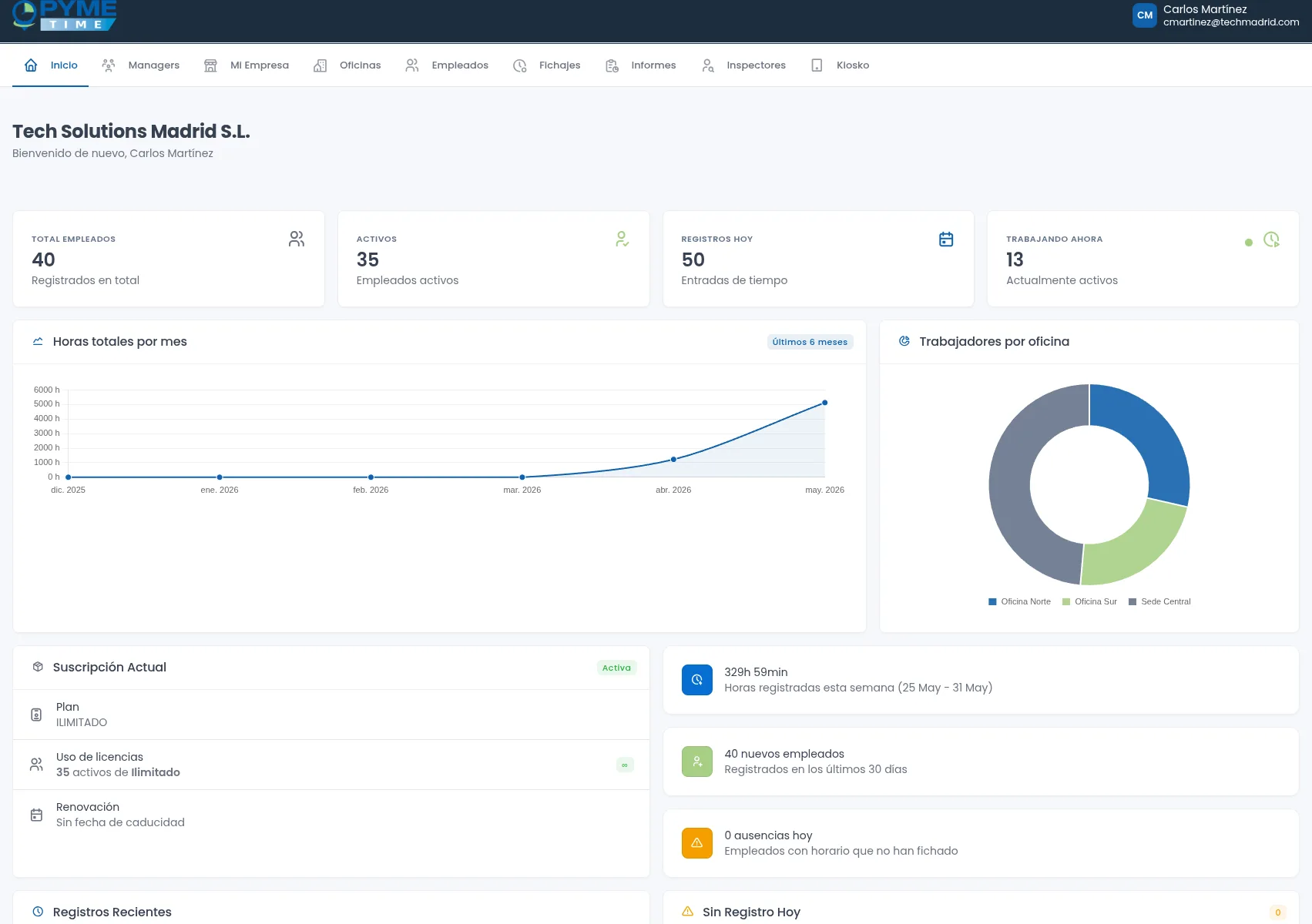
Real screenshots of the product’s key areas, organized as the system is used: daily review first, then detail, employees, reports and kiosk clock-in.
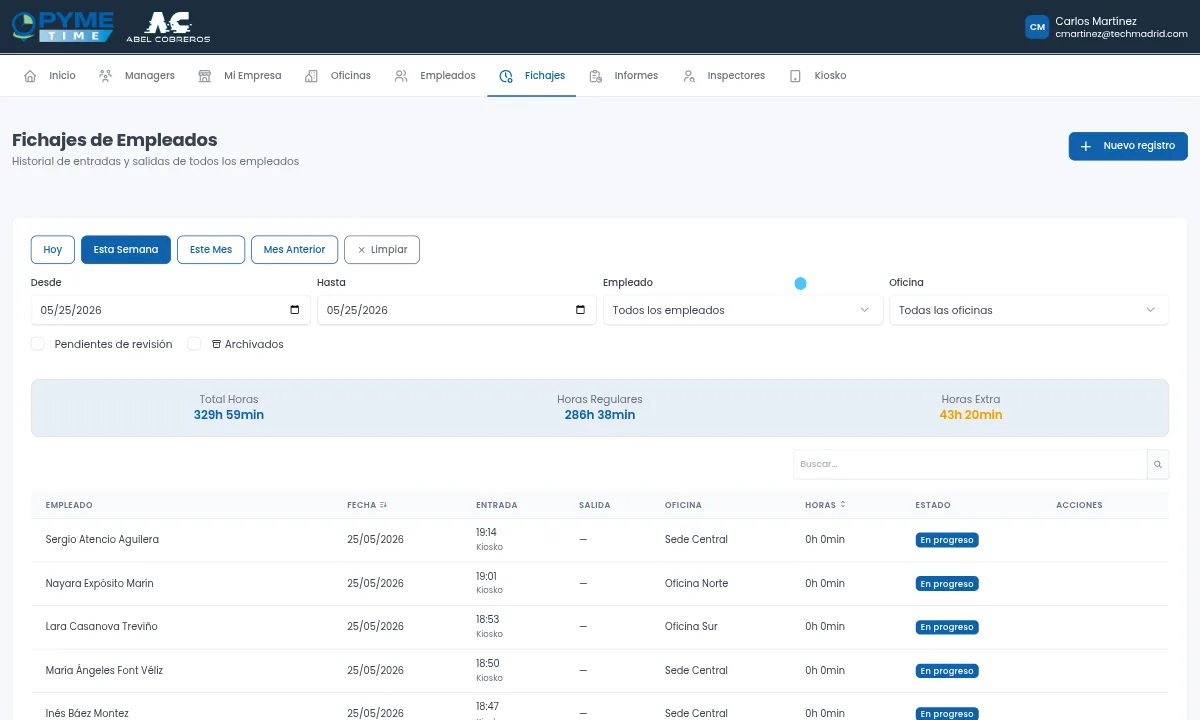
Daily view so managers and administration can detect entries, exits, breaks and incidents without reviewing external sheets.
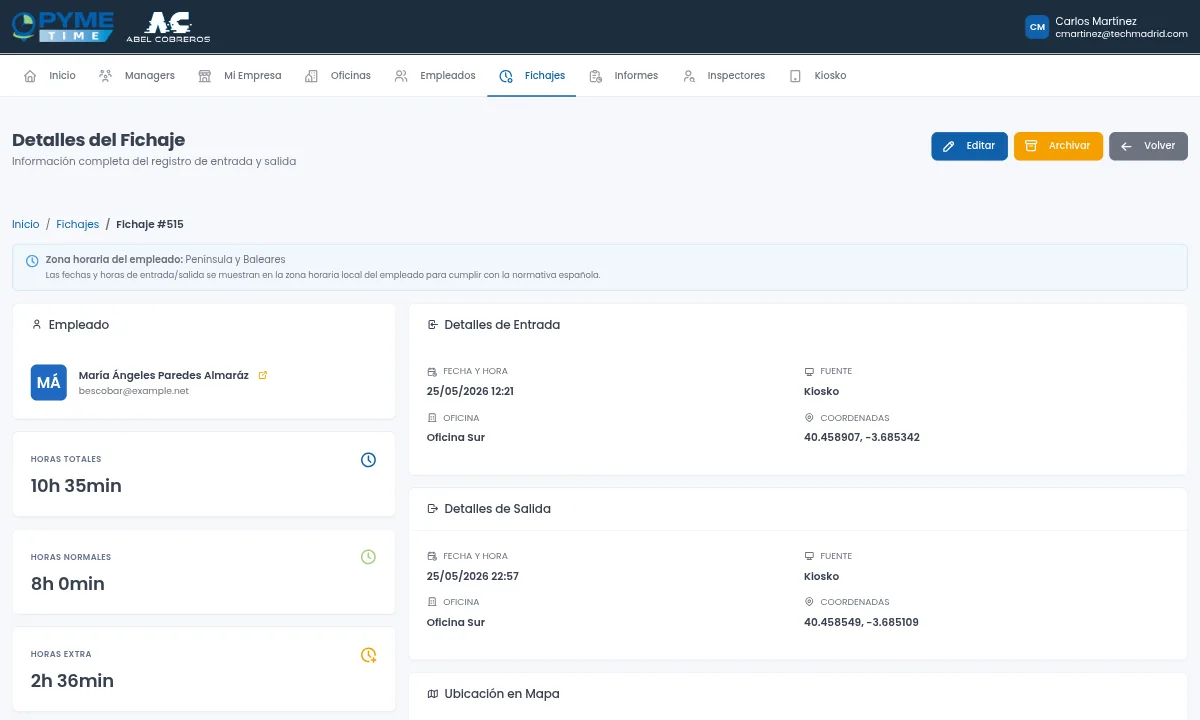
Individual review of a working day to validate breaks, adjustments and pending records with traceability.
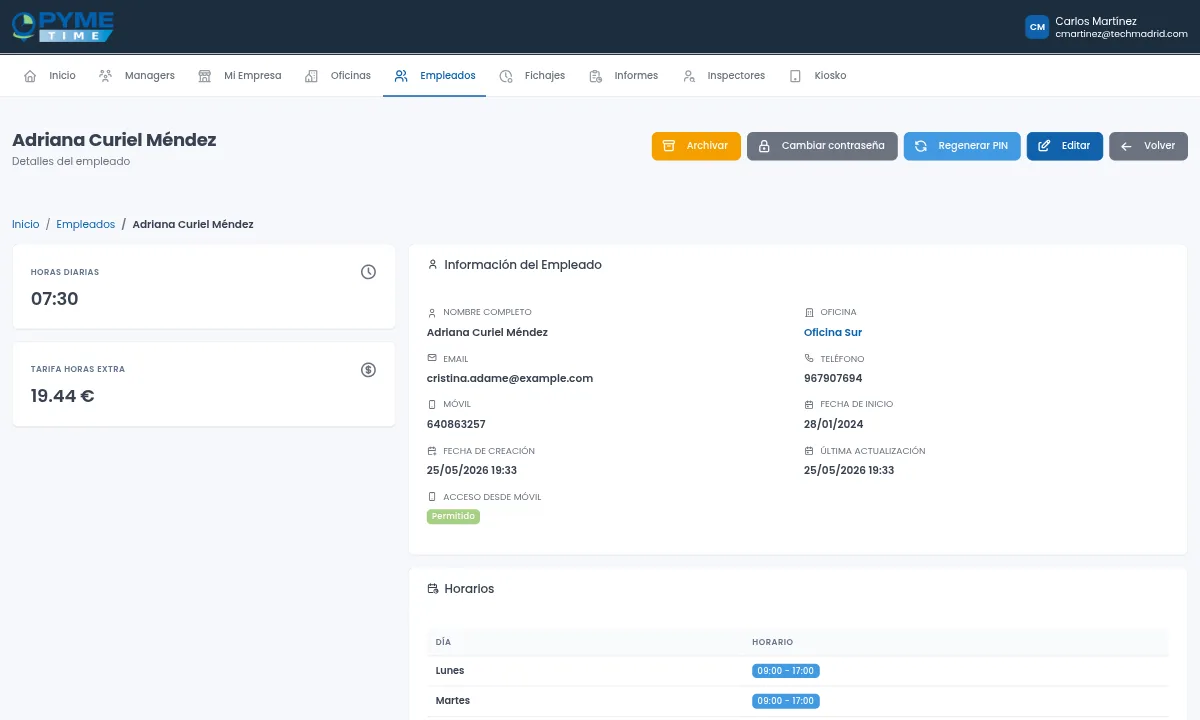
Single employee profile with employment data, assigned location and time tracking configuration.
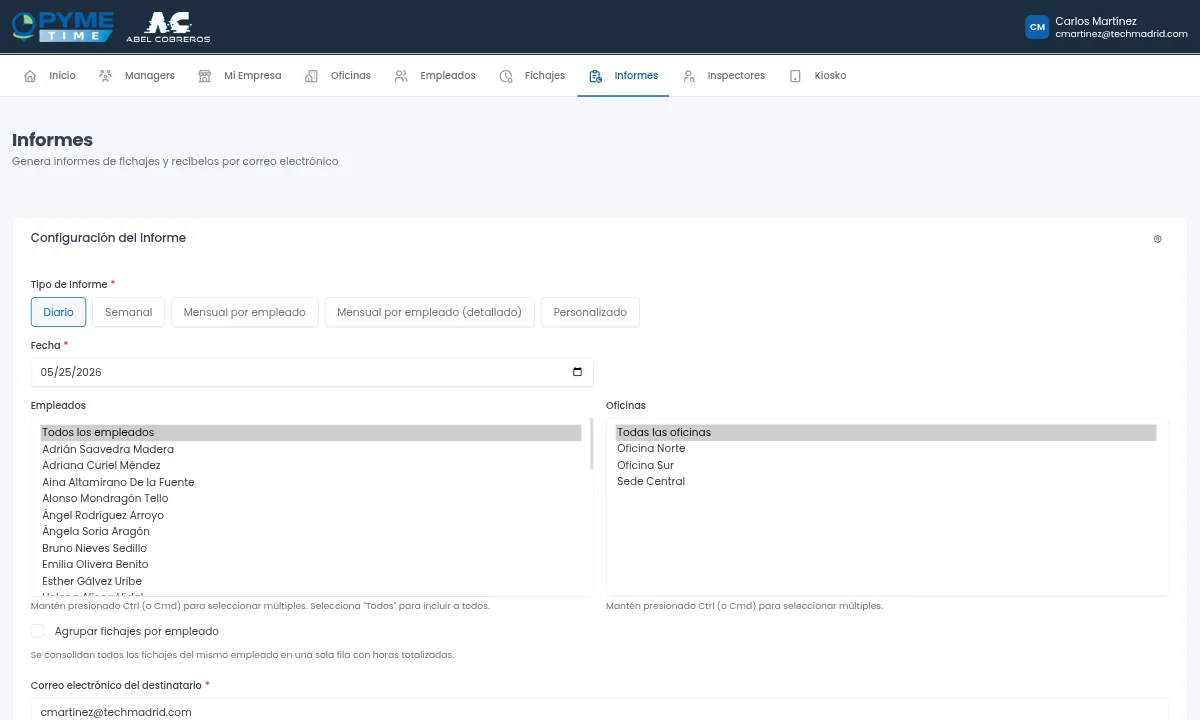
Report generation by employee, period and location to review activity, deviations and legal reports.
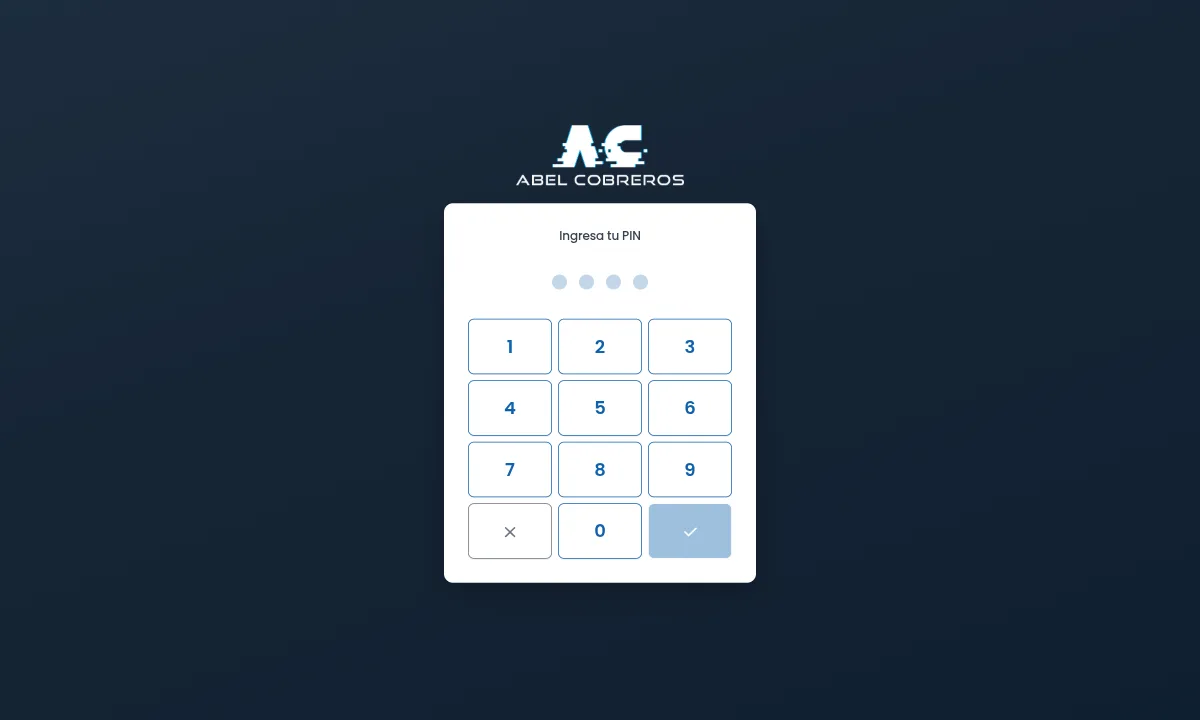
Fast identification for employees clocking in from a shared point in a store, office or work location.
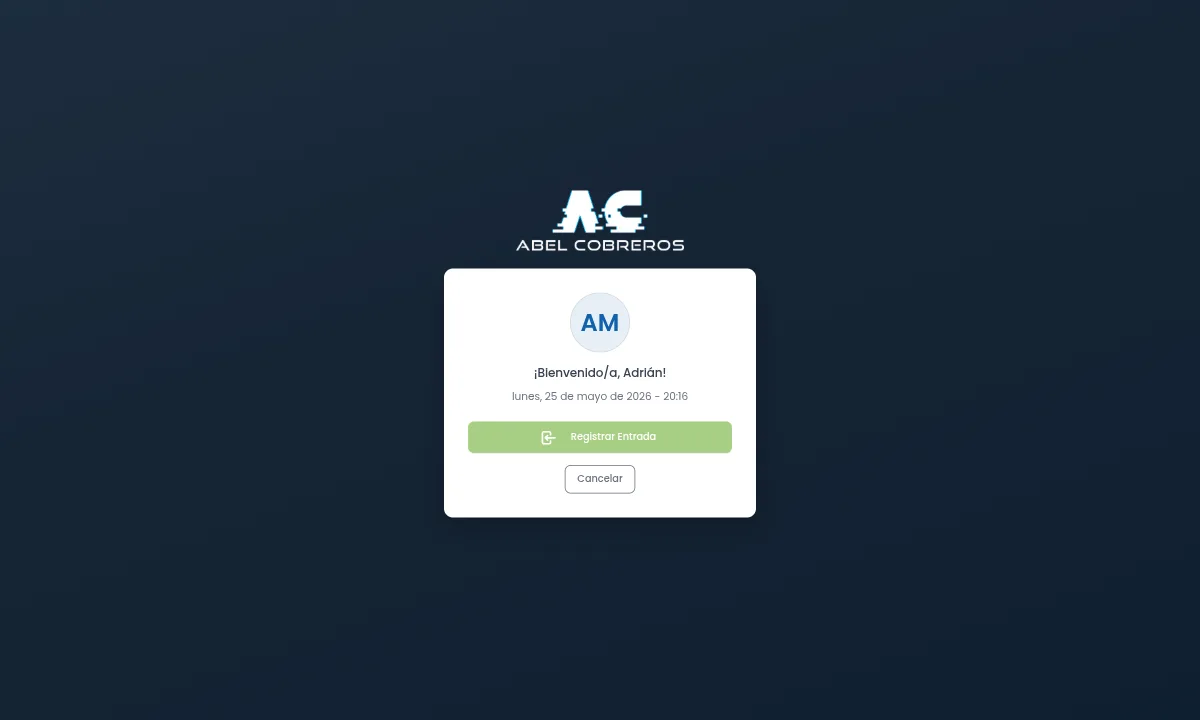
Entry, exit and break registration from an interface designed to take seconds and reduce errors.
Technical challenges
PymeTime had to feel simple for the end user while solving common business software cases underneath: permissions, locations, shared kiosks, auditable data and period-based reports.
Multi-company separation of employees, locations, clock-ins and configuration.
Permission control for administration, managers and employees.
Shared kiosk with fast PIN identification at physical points.
Validation of incidents and pending clock-ins from centralized panels.
Report export by employee, location and date range.
Scalable base to add new operational rules without rebuilding the product.
Impact
Managers moved from reviewing manual sheets to checking clock-ins, employees and incidents from a single platform.
HR can review working days, correct incidents and prepare reports without chasing data through messages or calls.
Managers and administration can see pending clock-ins, absences and activity by location without relying on manual reports.
A maintainable stack chosen for stability, security, and straightforward product development.
The platform allowed us to leave manual processes behind and centralize incidents, clock-ins and operational reporting in a single tool.

Turn clock-ins, incidents, employee records and reports into useful software for your team, without adding complexity to daily operations.
Book a free initial consultation