Abel Cobreros

Mobile application development

Custom mobile applications for business operations

I develop mobile applications for companies, including internal tools, operational apps, and platforms connected to existing systems.

  • Apps for employees and operations
  • ERP and API synchronization
  • iOS and Android from a shared codebase
  • Phased development and ongoing support

Development process

Mobile applications designed around how your company works

Each application is designed to simplify specific tasks and provide a clear day-to-day experience for its users.

Phase 1 — 4
touch_app 01

User-centered design

Clear applications that employees and customers can use with minimal training.

smartphone 02

Cross-platform development

A single application for iOS and Android that reduces development and maintenance time.

  • check_circle Unified iOS and Android
  • check_circle Clean and maintainable code
hub 03

Systems integration

Connections with ERPs, APIs, e-commerce platforms, and internal tools already used by the company.

ERP CRM REST API
rocket_launch 04

Publication and support

Publication on App Store and Google Play, technical support and continuous evolution of the application.

database
ERP and CRM
Connected with your current tools
api
API integration
Data always up to date
security
Secure access
Authentication and protected data

Systems integration

Applications connected to your company’s existing systems

Mobile applications are more useful when they connect to the tools your company already uses: ERP, CRM, e-commerce, or internal systems.

sync

Real-time synchronization: Information updated automatically between the app and your internal systems.

cloud_off

Offline operation: The application keeps working even without connection and automatically synchronizes data when internet returns.

Featured case study

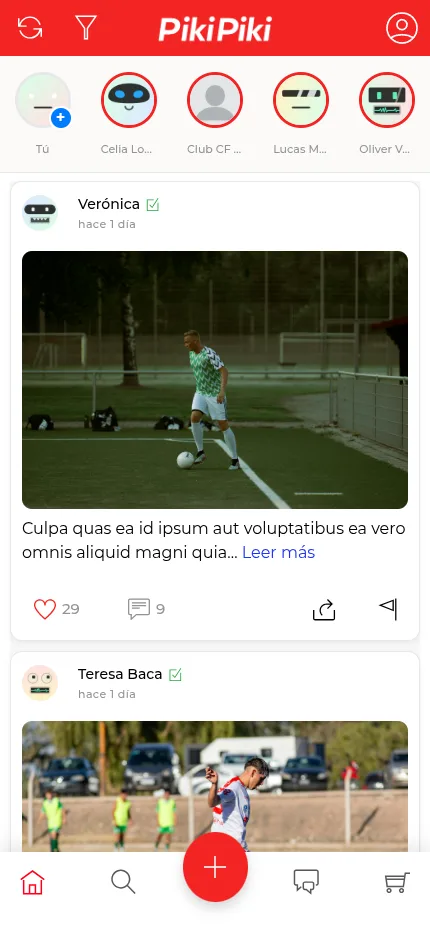
PikiPiki: a custom-built mobile application

PikiPiki is a mobile platform that connects players, fans, and clubs through social profiles, listings, chat, and an administration panel.

check_circle

Custom users and profiles

check_circle

Multimedia content and communication

check_circle

Real-time notifications and activity

check_circle

Shared cross-platform codebase

See how it was developed arrow_forward
PikiPiki
Main screen of the PikiPiki mobile application

How I work

Each company needs a different solution

Not all mobile applications require the same architecture or investment. I define the most suitable solution according to each company’s goals, processes and budget.

smartphone
Optimized experience
Fast and smooth applications on iOS and Android
speed
Phased delivery
A focused first version with room to evolve
api
Integration with your systems
Connection with ERPs, CRMs, APIs and internal tools
notifications_active
Real time
Notifications and synchronization
store
Store publication
App Store and Google Play
build_circle
Continuous support
Continuous evolution after launch

Use cases

Common use cases in business mobile applications

I develop mobile applications for different operational needs, from logistics and sales teams to e-commerce, bookings, and internal tools.

local_shipping

Logistics and transport

Operational tracking and mobile management.

groups

Sales teams

Fast access to customers, activity and reporting.

shopping_bag

E-commerce

Orders, catalog, and a connected mobile experience.

badge

Internal management

Tools for employees and operations.

event_available

Bookings and appointments

Availability, notifications and automated management.

bar_chart

Mobile dashboards

Key information and metrics in real time.

Frequently asked questions

Everything you need to know about mobile application development

Answers to common questions before you make a decision.

I develop mobile applications for internal operations, sales teams, logistics, bookings, e-commerce, dashboards, and business management.

Each project is designed around the company’s workflow rather than a generic template.

Yes. I develop mobile applications for iOS and Android from a shared codebase when that approach fits the project.

This can reduce development and maintenance effort for operational apps that need to work on both platforms.

A native app is developed specifically for iOS or Android separately. A cross-platform app shares code for both systems.

For most business applications, the cross-platform solution offers the best balance between quality, cost and development speed.

It depends on usage.

If users need mobility, notifications, camera, geolocation or offline work, a mobile app is usually the best option.

If usage will mainly be from an office or browser, developing a web application may be more efficient.

Yes. I integrate applications with ERPs, CRMs, APIs, and internal tools already used by the company.

The app can exchange current data with those systems as part of the daily workflow.

Yes, if the project requires it. I can develop applications that work offline and automatically synchronize data when the connection returns.

It is especially useful for sales teams, logistics, warehouses or field work.

Yes. I handle the whole publication process: account configuration, technical review, version preparation and submission to App Store and Google Play.

I can also help with later updates and application maintenance.

Mobile applications need maintenance to remain compatible with new iOS and Android versions, fix incidents and evolve features.

A useful app does not stay frozen after launch: it evolves with the business.

Applications include secure authentication, encrypted communications and security best practices from the start.

If the project handles sensitive data, I adapt the architecture and access controls to the specific needs of the business.

It depends on complexity. An app with basic features may take a few weeks, while one with its own backend, integrations, and several user roles can require several months.

I review the scope before providing a timeline and estimate.

Yes. Many projects start with a first version focused on solving the main problem and evolve later based on actual usage.

The idea is to validate quickly without building more than necessary at the beginning.

Not sure whether you need custom software or a standard tool?

When it makes sense arrow_forward

Tell me what mobile application your company needs

I will review how your company works and help you define a useful mobile application with a realistic scope.

Book a free initial consultation